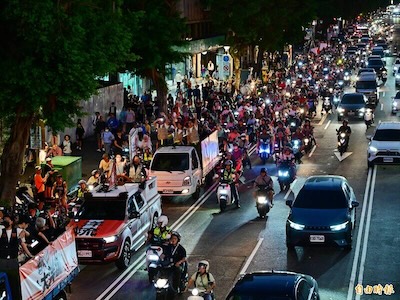
The contrast between China’s large-scale military exercises around Taiwan and Taiwan’s calm social atmosphere—along with a stock market reaching historic highs above 30,000—creates what many describe as an “unreal” or surreal dual reality. On one hand, military aircraft and naval vessels approach Taiwan’s airspace and maritime boundaries at unprecedented proximity; on the other, daily life continues normally, restaurants are full, and global investors are increasing their exposure to Taiwanese assets. Understanding this condition requires examining history, psychology, and strategic behavior.
From a financial perspective, Taiwan’s market resilience is not entirely unexpected. Over the past decade, China has conducted dozens of military drills—large and small—near Taiwan. Each time, markets experienced only brief volatility before stabilizing. Investors have learned that these exercises, though alarming, are largely political signaling rather than imminent war preparations. In this sense, China may have unintentionally created a “boy-who-cried-wolf” effect: frequent coercive actions reduce the perceived likelihood that any single exercise will escalate into real conflict. As a result, foreign institutional investors continue to invest, driven by Taiwan’s dominance in semiconductors, AI hardware, and global supply chains—industries too critical to be ignored.
Historically, there are parallels. During the Cold War, West Berlin thrived economically even while surrounded by Soviet forces. South Korea’s markets repeatedly hit new highs despite decades of North Korean missile tests. In both cases, societies adapted to long-term external threats, normalizing a level of geopolitical danger that outsiders found intolerable. Taiwan is entering a similar psychological and economic pattern: danger becomes background noise, and life goes on.
However, normalization does not eliminate risk. The PLA’s recent drills—hypothetically described as “closer than ever”—introduce greater operational uncertainty. High-tempo military activities always carry the risk of accidental escalation. A pilot miscalculating flight altitude or a naval vessel misreading radar signals could trigger unintended conflict. Taiwan’s government, under President Lai Ching-te, has adopted a strategy of restraint, avoiding military tit-for-tat responses to prevent precisely such miscalculations. This restraint signals confidence and stability to international partners, but it also means Beijing may interpret calmness as tolerance.
The question, then, is whether Taiwan’s lack of military reaction increases or decreases the probability of accidents. Strategically, Taiwan’s approach is based on avoiding actions that could be misinterpreted as aggression. Yet even without intentional escalation, friction zones are inherently dangerous. The closer the PLA operates to Taiwan’s shores, the thinner the margin for error becomes.
In summary, Taiwan’s booming stock market and societal calm reflect both economic strength and psychological adaptation. History shows that societies under long-term threat can remain stable and prosperous. But it also teaches that accidents, not intention, often ignite conflicts. Whether China’s repeated drills create stability through predictability—or danger through fatigue—remains an open question. The paradox of peace amid pressure will continue to define Taiwan’s strategic reality.
Author : Cathy Lin